Organic Chem Lab Survival Manual: A Comprehensive Guide
Navigating organic chemistry labs demands mastery of techniques, safety protocols, and responsible waste management for successful experimentation and analysis.
I. Lab Safety Fundamentals
Prioritizing safety is paramount in any organic chemistry laboratory. A comprehensive understanding of potential hazards and preventative measures is crucial for protecting yourself and your colleagues. Personal Protective Equipment (PPE), including safety goggles, gloves, and lab coats, forms the first line of defense against chemical exposure. Always wear appropriate attire and ensure PPE is in good condition.
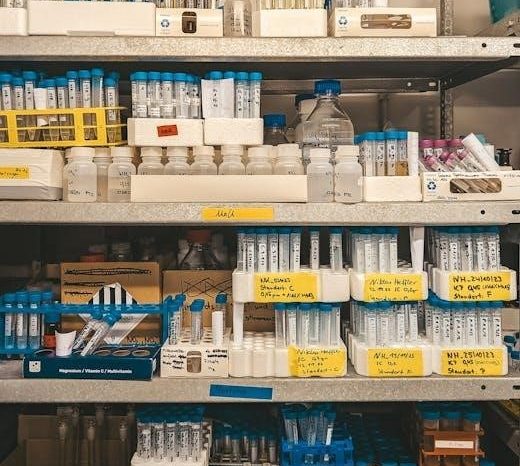
Chemical Handling & Storage requires meticulous attention to detail. Familiarize yourself with Safety Data Sheets (SDS) for each chemical, understanding its specific hazards and handling procedures. Proper storage, segregated by compatibility, prevents dangerous reactions.
Emergency Procedures & First Aid knowledge is essential. Know the location of safety equipment – eyewash stations, safety showers, and fire extinguishers – and how to use them effectively. Be prepared to respond calmly and efficiently in case of spills, accidents, or injuries. Understanding the risks associated with Persistent Organic Pollutants (POPs) is also vital.
A. Personal Protective Equipment (PPE)
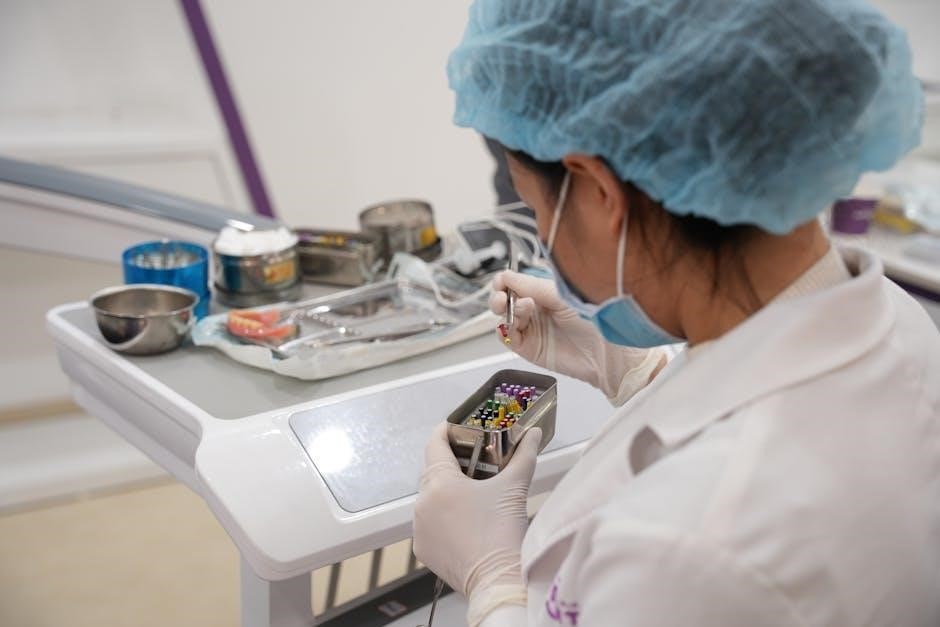
Effective Personal Protective Equipment (PPE) is the cornerstone of lab safety, minimizing exposure to hazardous chemicals. Safety goggles are non-negotiable, shielding your eyes from splashes, fumes, and projectiles. Choose goggles that provide a secure, splash-proof seal. Lab coats, constructed from appropriate materials, protect skin and clothing from contamination. Button them fully and remove them before leaving the lab.
Gloves are critical, but selection matters. Different chemicals require different glove materials (nitrile, latex, neoprene) to prevent permeation. Inspect gloves for tears or punctures before each use.
Closed-toe shoes are mandatory, protecting feet from spills and dropped objects. Avoid shorts and loose clothing that could become contaminated or entangled in equipment. Remember, PPE is your primary barrier against potential harm; use it consistently and correctly.
B. Chemical Handling & Storage
Safe chemical handling and proper storage are paramount in an organic chemistry lab. Always read the Safety Data Sheet (SDS) before using any chemical, understanding its hazards and necessary precautions. Dispense chemicals carefully, avoiding spills and contamination. Never return unused chemicals to the original container to prevent reactions.
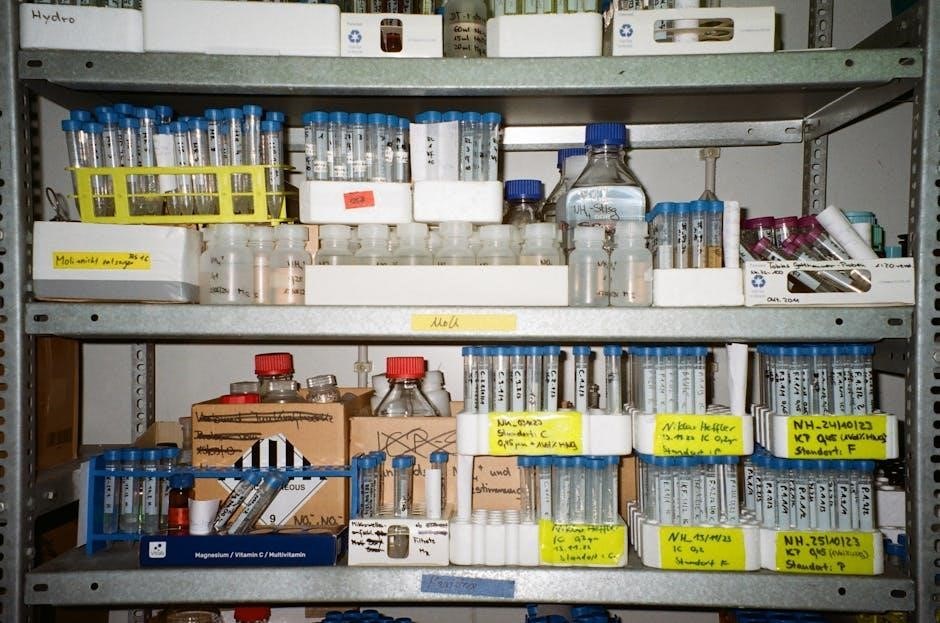
Storage must be organized and compatible. Flammable liquids should be stored in designated flammable cabinets, away from ignition sources. Acids and bases should be segregated and stored in corrosion-resistant containers.
Clearly label all containers with the chemical name, concentration, and date. Avoid storing chemicals on the floor or in direct sunlight. Be mindful of potential reactivity – never store incompatible chemicals together. Proper ventilation is crucial when handling volatile substances.
C. Emergency Procedures & First Aid
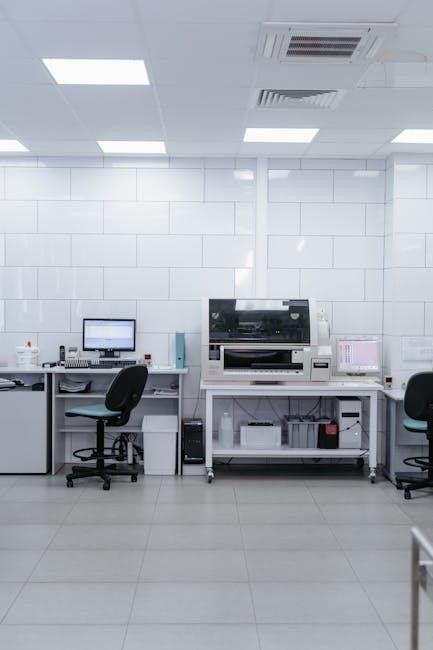
Knowing emergency procedures is vital for a safe lab environment. Familiarize yourself with the location of safety equipment – fire extinguishers, eyewash stations, safety showers, and first aid kits. In case of a chemical spill, immediately alert your instructor and follow established cleanup protocols, utilizing appropriate personal protective equipment (PPE).
For skin contact with chemicals, flush the affected area with copious amounts of water for at least 15 minutes. Eye contact requires immediate irrigation at an eyewash station.
If a chemical is ingested, do not induce vomiting unless directed by medical personnel. Seek immediate medical attention. Be aware of the lab’s evacuation plan and designated meeting point. Report all incidents, no matter how minor, to your instructor promptly.
II. Essential Lab Techniques
Mastering core techniques is fundamental to success in organic chemistry. This section details crucial procedures, starting with distillation – both simple and fractional – for separating liquids based on boiling points. Understanding principles like vapor pressure and Raoult’s Law is key.
Chromatography, a powerful separation science, will be explored, covering Thin Layer Chromatography (TLC) for quick analysis and Column Chromatography for larger-scale purification. Learn to interpret Rf values and optimize solvent systems.
Extraction, specifically liquid-liquid extraction, allows separation based on solubility. We’ll delve into acid-base extraction and the concept of the partition coefficient to maximize efficiency; Proper technique minimizes losses and ensures clean separations.
A. Distillation: Principles & Practice
Distillation leverages boiling point differences to separate liquids. Simple distillation is effective for liquids with significantly different boiling points (at least 25°C difference), utilizing basic apparatus like a flask, condenser, and receiver. Careful heating and monitoring are crucial to avoid bumping and ensure efficient separation.
However, when boiling points are closer, fractional distillation becomes necessary. This employs a fractionating column, providing a larger surface area for repeated vaporization and condensation, leading to a more refined separation.
Understanding concepts like vapor pressure, Raoult’s Law, and azeotropes is vital for optimizing distillation processes. Proper setup, controlled heating rates, and careful collection of fractions are essential for achieving high purity.
Simple Distillation
Simple distillation is a foundational technique for separating liquids with substantial boiling point differences—generally exceeding 25°C. The process involves heating a liquid mixture, vaporizing the component with the lower boiling point, condensing the vapor back into a liquid, and collecting the distillate.
Essential components include a distillation flask, condenser, receiving flask, and heat source. A crucial aspect is controlling the heating rate to prevent “bumping” – sudden, violent boiling.
Proper apparatus assembly, ensuring tight seals to prevent vapor leaks, is paramount. Monitoring the temperature at the distillation head provides real-time feedback on the vapor composition. Careful observation of the boiling point range confirms successful separation. This method is ideal for preliminary purification or removing volatile solvents.
Fractional Distillation
Fractional distillation excels at separating liquids with closely spaced boiling points—less than 25°C apart—where simple distillation falters. This technique employs a fractionating column placed between the distillation flask and condenser, providing a larger surface area for repeated vaporization and condensation cycles.
The column, often packed with glass beads or rings, creates a temperature gradient, enriching the vapor in the lower-boiling component as it ascends. Precise temperature control and a slow distillation rate are vital for effective separation.
Monitoring the temperature at various points along the column helps optimize the process. Collecting fractions based on boiling point ranges allows for isolating individual components. Fractional distillation is indispensable for refining petroleum products and purifying complex organic mixtures.
B. Chromatography: Separation Science
Chromatography represents a powerful suite of techniques for separating mixtures based on differing affinities between components and a stationary and mobile phase. This versatile approach is fundamental in organic chemistry for purification, identification, and quantitative analysis.
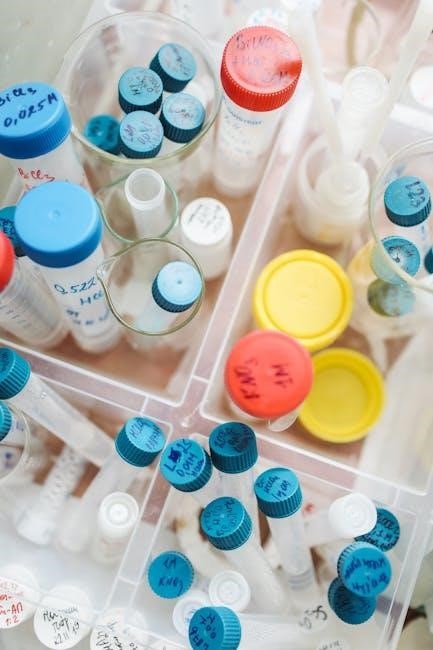
The core principle involves distributing compounds between these phases; those with a stronger interaction with the stationary phase move slower, leading to separation. Several chromatographic methods exist, each suited for specific applications.
Thin Layer Chromatography (TLC) offers a quick, qualitative analysis, while Column Chromatography provides preparative-scale purification. Understanding polarity, solvent systems, and stationary phase properties is crucial for successful chromatographic separations. Careful technique and proper spotting are essential for accurate results.
Thin Layer Chromatography (TLC)
Thin Layer Chromatography (TLC) is a rapid and inexpensive analytical technique used to assess the purity of a compound, monitor reaction progress, and identify substances. It employs a stationary phase – typically silica gel or alumina coated on a glass or plastic plate – and a mobile phase, a solvent or solvent mixture.
Samples are spotted onto the plate, which is then placed in a developing chamber with the mobile phase. As the solvent ascends, compounds separate based on their polarity and interaction with the stationary phase. Visualization, often using UV light or staining, reveals the separated spots.
The retention factor (Rf), calculated as the distance traveled by the compound divided by the distance traveled by the solvent, characterizes each compound’s migration. Mastering spotting technique, solvent selection, and Rf interpretation are key to successful TLC analysis.
Column Chromatography
Column chromatography is a powerful purification technique used to separate compounds based on their differing affinities for a stationary and mobile phase. It’s essential for isolating desired products from complex reaction mixtures.
A glass column is packed with a solid adsorbent (stationary phase), commonly silica gel or alumina. The sample is loaded onto the top, and a solvent or solvent mixture (mobile phase) is passed through the column. Compounds elute at different rates depending on their polarity and interaction with the stationary phase.
Careful solvent selection and gradient elution are crucial for optimal separation. Fractions are collected and analyzed, often by TLC, to identify those containing the desired compound. Proper column packing and flow rate control are vital for achieving high resolution and efficient purification.
C. Extraction: Liquid-Liquid Separation
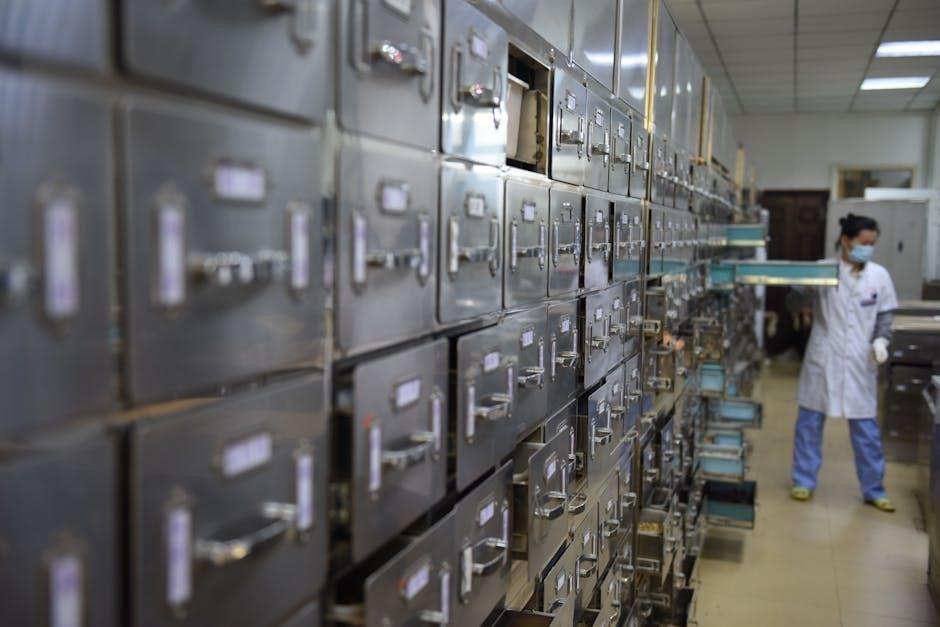
Liquid-liquid extraction is a fundamental technique for separating compounds based on their relative solubilities in two immiscible liquids, typically an aqueous and an organic solvent. This process leverages differences in polarity to selectively transfer compounds between phases.
A mixture is dissolved in a solvent, then mixed with an immiscible solvent. After thorough mixing and settling, two distinct layers form. The desired compound preferentially partitions into one layer, allowing for separation. Multiple extractions with fresh solvent improve efficiency.
Understanding the partition coefficient – the ratio of a compound’s concentration in each phase – is key to optimizing extraction. Careful pH adjustments, as in acid-base extraction, can dramatically alter solubility and separation. Always vent the separatory funnel frequently to release pressure!
Acid-Base Extraction
Acid-base extraction is a powerful variation of liquid-liquid extraction, exploiting the acidic or basic properties of organic compounds to facilitate separation. This technique relies on converting compounds into their ionic forms, making them soluble in aqueous solutions.
For example, carboxylic acids can be deprotonated with a base (like sodium bicarbonate) to form water-soluble carboxylate salts. Conversely, amines can be protonated with an acid (like hydrochloric acid) to form water-soluble ammonium salts. This shifts the compound’s distribution between the organic and aqueous phases;
Careful pH control is crucial; ensuring complete ionization without unwanted side reactions. Multiple extractions are often necessary for optimal separation. Remember to back-extract the aqueous phase to recover the compound in its original form after purification!
Partition Coefficient & Efficiency
Understanding the partition coefficient (Kp) is vital for optimizing liquid-liquid extractions. Kp represents the ratio of a compound’s concentration in the organic phase to its concentration in the aqueous phase at equilibrium, indicating its preference for each solvent.
A higher Kp favors the organic phase, while a lower Kp favors the aqueous phase. Extraction efficiency isn’t simply about Kp, though. It’s also influenced by the number of extractions performed and the volume ratio of solvents used.
Multiple extractions with smaller volumes of solvent are generally more effective than a single extraction with a large volume. This is because each extraction removes a fraction of the desired compound, progressively increasing overall recovery. Calculating the theoretical number of extractions needed for desired purity is a valuable skill.
III. Purification & Analysis Methods
Achieving pure compounds and confirming their identity are cornerstones of organic chemistry. Purification techniques like recrystallization leverage solubility differences to isolate desired products, while analysis methods verify purity and structure.
Recrystallization involves dissolving an impure solid in a hot solvent and allowing it to slowly cool, forming crystals of the pure compound. Careful solvent selection, based on solubility principles, is crucial for success; Melting point determination provides a quick assessment of purity – a sharp melting point indicates a relatively pure substance.
Spectroscopic techniques, such as Infrared (IR) and Nuclear Magnetic Resonance (NMR) spectroscopy, offer detailed structural information. IR identifies functional groups, while NMR reveals the arrangement of atoms within the molecule, confirming the compound’s identity.
A. Recrystallization: Achieving Purity
Recrystallization is a vital purification technique, relying on differential solubility of a compound and its impurities in a chosen solvent. The process begins with dissolving the impure solid in a minimal amount of hot solvent, creating a saturated solution;
Solvent selection is paramount; an ideal solvent dissolves the compound when hot but poorly when cold, while effectively dissolving impurities at all temperatures. Slow cooling encourages the formation of pure crystals, excluding impurities from the crystal lattice. Techniques like scratching the flask or seeding with a pure crystal can initiate crystallization.
Filtration separates the crystals from the mother liquor (containing impurities), followed by washing with cold solvent to remove residual contaminants. Finally, drying yields the purified compound, significantly enhancing its purity for subsequent analysis and reactions.
Solvent Selection & Solubility
Choosing the right solvent is crucial for successful recrystallization, demanding careful consideration of solubility principles. Ideally, the solvent should dissolve the compound readily at high temperatures but exhibit poor solubility when cold, maximizing crystal yield and purity.
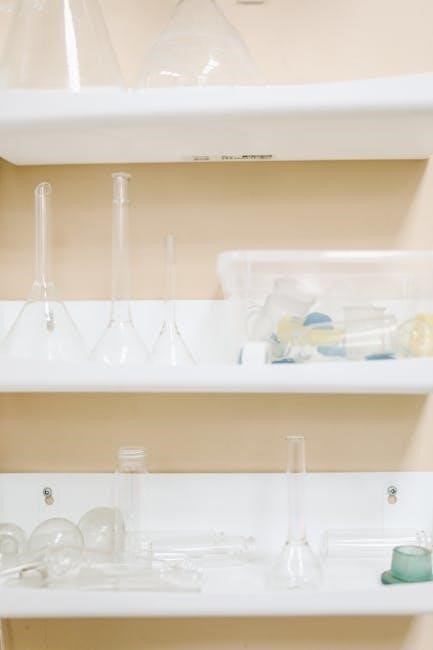
A good starting point is to test solubility in several solvents – both polar and nonpolar – to identify a suitable candidate; The “like dissolves like” rule applies; polar compounds dissolve in polar solvents (e.g., water, ethanol), while nonpolar compounds dissolve in nonpolar solvents (e.g., hexane, diethyl ether).
Mixed solvent systems can also be effective, leveraging the properties of multiple solvents. Observing the temperature dependence of solubility is key; a significant difference in solubility between hot and cold conditions is essential for efficient recrystallization.

Techniques for Crystal Growth
Once a saturated solution is achieved, initiating crystal formation requires careful technique. Slow cooling is paramount; rapid cooling leads to small, impure crystals. Scratching the flask wall with a glass rod often provides nucleation sites, encouraging crystal growth. Alternatively, seeding with a tiny crystal of the pure compound can induce crystallization.
Avoid disturbing the solution during cooling to prevent premature nucleation and the formation of numerous small crystals. Filtering the hot solution removes insoluble impurities, enhancing purity. Allowing the solution to cool undisturbed, ideally overnight, promotes the growth of larger, well-defined crystals.
Once formed, crystals are collected by vacuum filtration, washed with a small amount of cold solvent, and dried to obtain the purified compound.
B. Melting Point Determination: Assessing Purity
Melting point determination is a crucial technique for assessing the purity of a crystalline organic compound. A sharp melting point range—typically less than 1-2°C—indicates high purity. Impurities broaden and depress the melting point. The process involves carefully heating a small sample in a capillary tube attached to a melting point apparatus.
Observe the temperature at which the first liquid drop appears (initial melting point) and the temperature at which the sample is completely liquefied (final melting point). Record this range. Compare the observed melting point to literature values; discrepancies suggest impurities or an incorrect compound identification.
Slow, controlled heating is essential for accurate results. Rapid heating can lead to inaccurate readings.
C; Spectroscopic Analysis: Identifying Compounds
Spectroscopic techniques are indispensable for confirming the structure of synthesized compounds. Infrared (IR) spectroscopy identifies functional groups present based on vibrational frequencies of bonds. Key absorptions correlate to specific bonds (e.g., O-H, C=O, C-H). Nuclear Magnetic Resonance (NMR) spectroscopy provides detailed information about the carbon-hydrogen framework of a molecule.
1H NMR reveals the number of different types of protons and their chemical environments, while 13C NMR indicates the number of unique carbon atoms. Analyzing chemical shifts, splitting patterns (in 1H NMR), and integration values allows for structural elucidation.
Combining IR and NMR data provides a powerful approach to confidently identify unknown organic compounds.
Infrared (IR) Spectroscopy Basics
Infrared (IR) spectroscopy identifies functional groups within a molecule by measuring the absorption of infrared light. Different bonds vibrate at specific frequencies, and when IR light matches these frequencies, absorption occurs. A resulting spectrum plots transmittance (or absorbance) versus wavenumber (cm-1).
Key regions of the IR spectrum correspond to characteristic functional group stretches. For example, a broad peak around 3200-3600 cm-1 often indicates an O-H stretch (alcohols or carboxylic acids), while a strong peak around 1700 cm-1 suggests a C=O stretch (ketones, aldehydes, esters).
Analyzing peak positions and intensities helps determine the presence or absence of specific functional groups, aiding in compound identification and confirming reaction success.
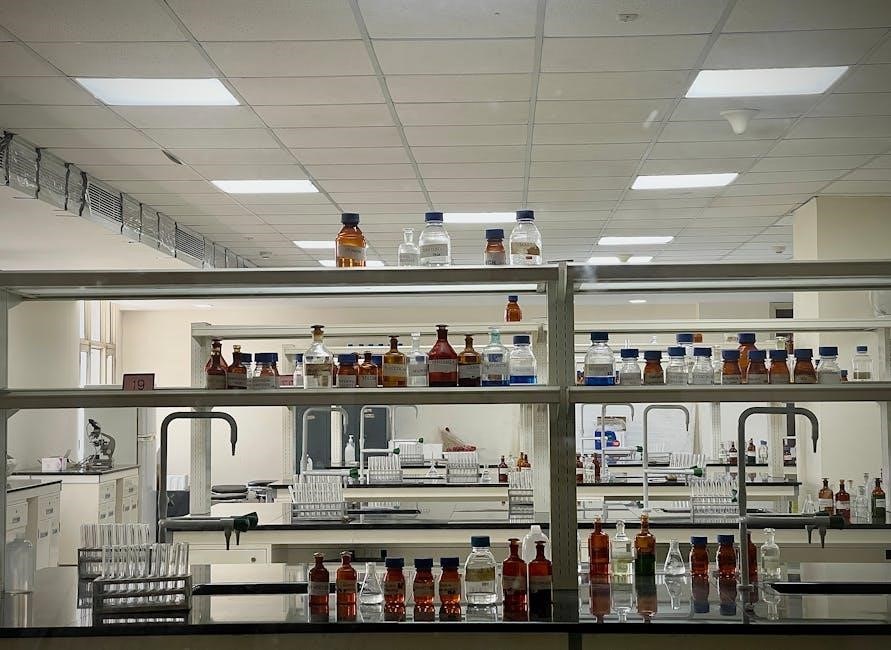
Nuclear Magnetic Resonance (NMR) spectroscopy is a powerful technique for elucidating the structure of organic molecules. It exploits the magnetic properties of atomic nuclei, particularly 1H and 13C, when placed in a strong magnetic field.
1H NMR provides information about the number of different types of hydrogen atoms and their electronic environments. Chemical shift (δ, ppm) indicates the type of proton, while integration reveals the relative number of protons. Splitting patterns (multiplicity) arise from spin-spin coupling with neighboring protons.
13C NMR shows the number of unique carbon environments. Analyzing chemical shifts helps identify functional groups and carbon-carbon bonds. Combined, these NMR techniques provide a detailed structural fingerprint of the molecule.
IV. Waste Management & Environmental Considerations
Responsible waste management is crucial in organic chemistry labs to minimize environmental impact and ensure safety. Proper disposal of chemical waste, categorized by hazard class, is paramount; never pour chemicals down the drain. Halogenated and non-halogenated solvents must be segregated.
Persistent Organic Pollutants (POPs), characterized by their longevity, bioaccumulation, and toxicity, require special handling. These substances pose significant risks to human health and ecosystems. Treatment of organic waste should prioritize eco-friendly methods, like composting where applicable, adhering to quality standards.
Implementing sustainable lab practices – reducing chemical usage, utilizing microscale experiments, and promoting recycling – further minimizes our footprint. Germany’s successful organic waste collection and composting programs demonstrate a viable path towards a greener chemistry future.
A. Proper Disposal of Chemical Waste
Effective chemical waste disposal is a cornerstone of lab safety and environmental responsibility. Never dispose of chemicals down the drain or in regular trash; this is strictly prohibited. Segregation is key – separate halogenated from non-halogenated solvents, acids from bases, and solid waste from liquids.
Clearly label all waste containers with the specific chemical constituents and hazard warnings. Utilize designated waste containers provided by your institution, ensuring compatibility between waste and container material. Follow established protocols for handling particularly hazardous materials, like heavy metals or highly reactive compounds.
Consult your lab’s waste disposal guidelines and Safety Data Sheets (SDS) for specific instructions. Proper training on waste handling procedures is essential for all lab personnel. Remember, responsible disposal protects both people and the environment.
B. Handling Persistent Organic Pollutants (POPs)
Persistent Organic Pollutants (POPs) require extreme caution due to their environmental longevity and bioaccumulative properties. These substances resist degradation, leading to long-range transport and concentration within the food chain, posing risks to both wildlife and human health.
When working with suspected or confirmed POPs, implement stringent containment measures. Utilize appropriate Personal Protective Equipment (PPE), including gloves, lab coats, and potentially respirators, to prevent exposure. Minimize the generation of aerosols or dust during handling.
Waste containing POPs must be segregated and disposed of according to strict regulatory guidelines. Avoid any practices that could release POPs into the environment. Thoroughly decontaminate all surfaces and equipment used with these compounds. Prioritize alternative, less persistent chemicals whenever feasible.
C. Sustainable Lab Practices & Organic Waste Treatment
Embracing sustainability in the organic chemistry lab minimizes environmental impact and promotes responsible resource utilization. This includes reducing solvent usage, opting for greener reagents, and implementing efficient waste management strategies.
Organic waste treatment is crucial; simply discarding chemicals is unacceptable. Explore options like solvent recycling, where appropriate, and proper segregation of waste streams. Composting organic materials, as practiced in Germany, offers a viable solution for certain types of lab waste, provided it meets quality standards.
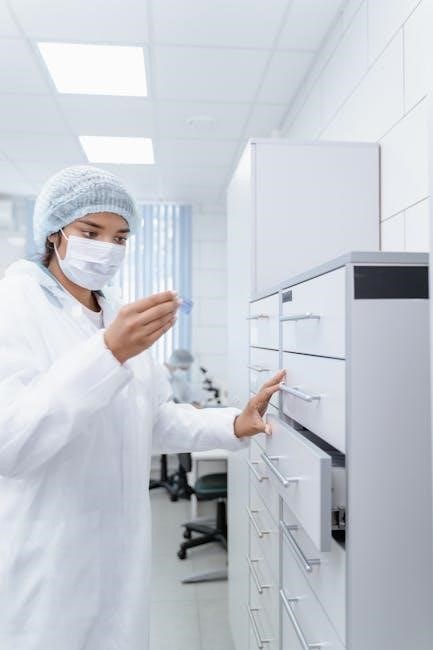
Prioritize ecofriendly treatment processes that minimize pollution and maximize resource recovery. Consider microscale experiments to reduce chemical consumption. Thoroughly assess the environmental footprint of all lab activities and continuously seek improvements towards a more sustainable approach.