
Tom Standage’s acclaimed work, readily available as a PDF, uniquely explores human history through the lens of six beverages – beer, wine, spirits, coffee, tea, and Coca-Cola.
Overview of Tom Standage’s Work
Tom Standage is a British writer and senior editor for The Economist, known for blending history with scientific and technological themes. His work frequently examines how innovations shape society, and “A History of the World in 6 Glasses” exemplifies this approach. The book, often sought after in PDF format for convenient access, isn’t merely a recounting of drink recipes; it’s a compelling narrative of civilization’s development.
Standage meticulously traces the evolution of these beverages, demonstrating their profound influence on culture, politics, economics, and even religion. He skillfully connects the history of each drink to broader historical trends, offering a fresh perspective on familiar events. His accessible writing style and rigorous research have made him a popular figure in popular history, appealing to both academic and general audiences.
The Central Thesis: Drinks as Historical Lenses
Tom Standage’s core argument, powerfully presented in “A History of the World in 6 Glasses” – frequently accessed as a PDF – is that beverages are not simply refreshments, but potent historical lenses. Each drink, he posits, fundamentally altered the course of civilization. From beer fostering Mesopotamian settlements to Coca-Cola symbolizing globalization, these liquids acted as catalysts for social change.
The book demonstrates how the production, distribution, and consumption of these drinks drove technological innovation, shaped trade routes, and influenced political power dynamics. Standage argues that understanding the history of these beverages provides a unique and insightful perspective on the broader sweep of human history, revealing hidden connections and unexpected consequences.
Significance of the Book in Popular History
Tom Standage’s “A History of the World in 6 Glasses,” widely available as a PDF, achieved significant popularity by offering a refreshingly accessible and unconventional approach to historical narrative. It broadened the scope of popular history, demonstrating how everyday objects – in this case, beverages – can illuminate larger societal trends.
The book’s success lies in its engaging writing style and its ability to connect seemingly disparate historical events through a common thread. It popularized the idea of “liquid history,” inspiring other works that explore the cultural and social impact of food and drink. Its enduring appeal continues to draw readers interested in a unique perspective on global history.
The Six Glasses and Their Historical Context
Standage’s book, often found as a convenient PDF, meticulously details how each beverage – beer to Coca-Cola – shaped civilizations and global interactions.

Beer: The Ancient World and Early Civilizations

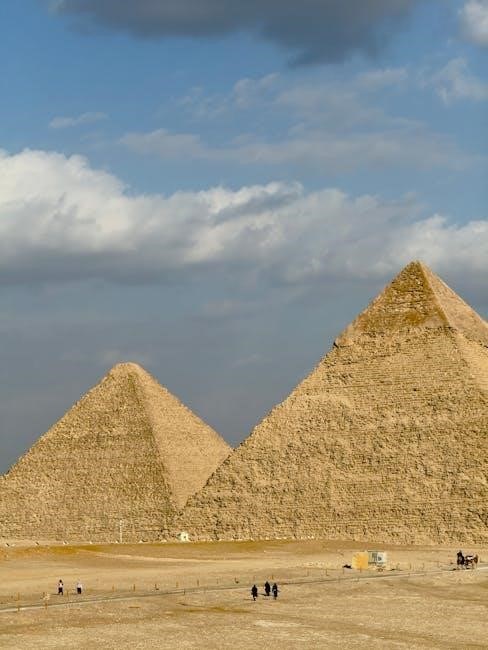
Tom Standage’s A History of the World in 6 Glasses, frequently accessed as a PDF, begins with beer, tracing its origins to Mesopotamia and ancient Egypt. He argues that beer wasn’t merely a drink, but a fundamental component of daily life, diet, and even religious rituals.
Early brewing traditions, detailed within the book, demonstrate beer’s importance in societal structures. It was safer than water, provided essential nutrients, and played a crucial role in ceremonies and offerings to deities. The readily available PDF version allows readers to explore Standage’s research on how beer facilitated social bonding and economic exchange in these early civilizations, effectively laying the groundwork for more complex societies;
Mesopotamia and Egypt’s Brewing Traditions
Tom Standage’s A History of the World in 6 Glasses, often found as a convenient PDF download, meticulously details the distinct brewing practices of Mesopotamia and Egypt. Mesopotamian brewers, as described in the book, utilized barley and employed sophisticated fermentation techniques, documented on clay tablets.
Egyptian brewing, explored within the PDF, was similarly integral, often linked to religious festivals and the provisioning of laborers. Both cultures viewed brewing as a sacred art, with dedicated deities associated with the process. Standage highlights how these traditions weren’t simply about creating an enjoyable beverage, but about establishing social hierarchies and economic systems, readily accessible through the book’s digital format.

Beer’s Role in Social and Religious Life
Tom Standage’s insightful A History of the World in 6 Glasses, easily accessed as a PDF, reveals beer’s profound impact on ancient societies. In Mesopotamia and Egypt, beer wasn’t merely a drink; it was central to daily life, religious rituals, and even payment for labor, as detailed in the PDF.
The book explains how beer consumption fostered social bonds and played a crucial role in ceremonies honoring deities. Standage illustrates that beer was often considered a gift from the gods, and its production was frequently overseen by priestesses. This readily available PDF demonstrates beer’s significance extended far beyond simple refreshment, shaping the cultural fabric of early civilizations.
Wine: The Mediterranean World and the Rise of Empires
Tom Standage’s A History of the World in 6 Glasses, conveniently found as a PDF, charts wine’s ascent alongside Mediterranean empires. The PDF details how ancient Greece embraced wine, elevating its consumption to a cultural art form, interwoven with mythology and symposiums – intellectual gatherings fueled by wine.
As the Roman Empire expanded, so too did viticulture, becoming a cornerstone of their economy and social life, as explained in the PDF. Wine symbolized status and power, and Roman engineering facilitated its widespread production and distribution. Standage’s work, available as a PDF, highlights wine’s role in solidifying Roman control and influence.
Ancient Greece and Wine Consumption
Tom Standage’s A History of the World in 6 Glasses, accessible as a PDF, meticulously details the profound connection between ancient Greece and wine. The PDF reveals wine wasn’t merely a beverage, but a central element of Greek culture, deeply embedded in religious rituals honoring Dionysus, the god of wine and fertility.
The PDF further explains how the Greeks developed sophisticated winemaking techniques and established wine as a staple of their diet. Symposia, intellectual gatherings, were intrinsically linked to wine consumption, fostering philosophical debate and social bonding. Standage, through his PDF, illustrates wine’s role in shaping Greek identity and societal norms.
Roman Expansion and Viticulture
Tom Standage’s A History of the World in 6 Glasses, available as a PDF, highlights how Roman expansion dramatically impacted viticulture. As the Roman Empire grew, so did their demand for wine, leading to the systematic cultivation of vineyards across conquered territories. The PDF details how Roman engineers developed advanced agricultural techniques to optimize wine production.
The PDF further explains that wine became a symbol of Roman power and sophistication, consumed by all social classes. Roman viticulture wasn’t just about quantity; quality improved, with specific regions becoming renowned for particular wine varieties. Standage’s PDF demonstrates how wine fueled Roman trade and solidified their cultural influence.
Spirits: The Age of Exploration and Colonialism
Tom Standage’s A History of the World in 6 Glasses, accessible as a PDF, reveals spirits’ crucial role during the Age of Exploration. The PDF details how distillation techniques, perfected over time, allowed for the creation of potent, portable alcoholic beverages like rum and brandy. These spirits were vital for sailors on long voyages, offering preservation and morale boosts.
The PDF further illustrates how spirits became deeply intertwined with the transatlantic slave trade, serving as a commodity in exchange for enslaved people. Colonial powers established distilleries in their colonies, fueling economic growth and exploitation. Standage’s work, in PDF format, underscores the dark side of spirits’ history.
The Development of Distillation Techniques
Tom Standage’s A History of the World in 6 Glasses, available as a PDF, meticulously traces the evolution of distillation. Initially developed by Arab alchemists, the PDF explains how techniques for concentrating alcohol from fermented liquids gradually improved. Early distillation produced relatively crude spirits, but advancements in still design – pot stills and later column stills – significantly increased purity and efficiency.
The PDF highlights how these innovations weren’t solely about stronger drinks; distillation also had applications in medicine and alchemy. As detailed in the PDF, the spread of distillation technology across Europe and eventually the Americas was pivotal in creating the diverse range of spirits we know today.
Spirits and the Transatlantic Slave Trade
Tom Standage’s A History of the World in 6 Glasses, accessible as a PDF, unflinchingly examines the dark connection between spirits – particularly rum – and the transatlantic slave trade. The PDF details how rum, produced in Caribbean colonies using molasses from sugar plantations, became a key commodity in this horrific system.
As the PDF explains, rum was used as currency to purchase enslaved Africans, fueling the demand for labor on sugar plantations. The triangular trade – Europe, Africa, and the Americas – was heavily reliant on this exchange. The PDF underscores the brutal economic realities underpinning the global spread of spirits during this period.
Coffee: The Enlightenment and the Rise of Coffeehouses
Tom Standage’s A History of the World in 6 Glasses, available as a PDF, meticulously charts coffee’s journey from Arabia to Europe and its pivotal role in the Enlightenment. The PDF highlights how coffee, unlike alcohol, provided a stimulating yet clear-headed beverage, fostering intellectual discourse.
As the PDF details, coffeehouses rapidly emerged as centers of social and political life, nicknamed “penny universities” due to the affordable access to information and debate. These spaces, explored in the PDF, facilitated the exchange of ideas, contributing significantly to the scientific revolution and the rise of public opinion.
Coffee’s Origins and Spread from Arabia
Tom Standage’s A History of the World in 6 Glasses, accessible as a PDF, traces coffee’s origins to the highlands of Ethiopia and its subsequent cultivation in Yemen. The PDF details how Sufi monasteries initially embraced coffee for its ability to aid concentration during religious practices.
As the PDF explains, coffee’s spread beyond Arabia was initially slow, facing resistance from some religious authorities. However, by the 17th century, the PDF notes, coffee had firmly established itself in the Ottoman Empire, becoming a popular social drink. From there, European travelers discovered coffee, initiating its rapid dissemination across the continent, as thoroughly documented in the PDF.
Coffeehouses as Centers of Intellectual Exchange
Tom Standage’s A History of the World in 6 Glasses, available as a PDF, highlights the pivotal role coffeehouses played in the Enlightenment. The PDF details how these establishments, rapidly proliferating across Europe, became hubs for discussion, debate, and the exchange of ideas.
As the PDF explains, coffeehouses offered a relatively affordable and accessible space for people from diverse backgrounds to gather. The PDF emphasizes that they fostered a culture of intellectual curiosity, attracting writers, scientists, and politicians. These spaces, as described in the PDF, were instrumental in shaping public opinion and driving scientific advancements.
Tea: The British Empire and Global Trade
Tom Standage’s A History of the World in 6 Glasses, accessible as a PDF, meticulously details tea’s profound connection to the British Empire and the expansion of global trade. The PDF reveals how the British East India Company established a near-monopoly over the tea trade, dramatically altering Anglo-Chinese relations.
As the PDF explains, the demand for tea fueled extensive trade networks and colonial ambitions. The PDF highlights the imbalances created by this trade, ultimately contributing to events like the Opium Wars. The PDF further illustrates how tea became deeply ingrained in British culture, shaping social customs and economic policies.
The British East India Company and Tea Monopoly
Tom Standage’s A History of the World in 6 Glasses, available as a PDF, thoroughly examines the British East India Company’s pivotal role in establishing a tea monopoly. The PDF details how the Company transitioned from a trading entity to a political power, leveraging its control over tea to amass wealth and influence.
As the PDF explains, the Company secured exclusive rights to tea trade with China, effectively controlling the supply to Britain and beyond. This PDF reveals how this monopoly led to aggressive tactics, including the suppression of competition and exploitation of resources. The PDF further illustrates the Company’s impact on both British and Chinese economies.

Tea’s Impact on Anglo-Chinese Relations
Tom Standage’s A History of the World in 6 Glasses, accessible as a PDF, meticulously details tea’s profound influence on Anglo-Chinese relations. The PDF highlights how Britain’s insatiable demand for tea created a significant trade imbalance, leading to escalating tensions. As the PDF explains, the British sought to offset this imbalance through the opium trade, a practice vehemently opposed by the Chinese government.
This PDF reveals how these trade disputes ultimately culminated in the Opium Wars, dramatically reshaping the relationship between the two nations. The PDF illustrates how tea, initially a symbol of cultural exchange, became a catalyst for conflict and colonial expansion, profoundly impacting both societies.
Coca-Cola: Globalization and Modern Consumer Culture
Tom Standage’s A History of the World in 6 Glasses, available as a PDF, examines Coca-Cola as the ultimate symbol of globalization and modern consumer culture. The PDF details how, originating as a medicinal tonic, Coca-Cola rapidly transformed into a globally recognized brand through innovative marketing strategies.
As the PDF explains, its widespread distribution mirrored and fueled the expansion of American influence worldwide. The PDF illustrates how Coca-Cola’s branding and advertising techniques pioneered modern consumerism, creating a desire for standardized products across diverse cultures. This PDF demonstrates how a simple beverage became a potent emblem of American power and a defining feature of the 20th and 21st centuries.
Coca-Cola’s Origins and Marketing Strategies
Tom Standage’s A History of the World in 6 Glasses, accessible as a PDF, meticulously details Coca-Cola’s humble beginnings as a medicinal syrup in 1886. The PDF reveals how John Pemberton initially marketed it as a brain tonic and cure-all.
The PDF further explains Asa Griggs Candler’s pivotal role in transforming Coca-Cola into a national beverage through aggressive and innovative marketing. This PDF highlights early strategies like distributing coupons for free samples and creating branded merchandise. The PDF emphasizes the power of advertising, utilizing eye-catching imagery and slogans to build brand recognition. This early marketing genius, as detailed in the PDF, laid the foundation for Coca-Cola’s global dominance.
Coca-Cola as a Symbol of American Influence
Tom Standage’s A History of the World in 6 Glasses, available as a PDF, argues that Coca-Cola became a potent symbol of American culture and globalization. The PDF details how, during World War II, the company ensured that American soldiers had access to Coca-Cola, fostering a connection between the drink and American values.
As the PDF explains, post-war expansion saw Coca-Cola aggressively entering international markets, often aligning itself with American foreign policy. The PDF illustrates how the drink’s ubiquity came to represent American economic and cultural power. This PDF showcases how Coca-Cola, beyond being a beverage, became a globally recognized emblem of the American lifestyle and its influence worldwide.

Themes and Analysis
Standage’s A History of the World in 6 Glasses, often found as a PDF, reveals how beverages drive social change, innovation, and global interconnectedness.
The Social Impact of Beverages
Tom Standage’s insightful book, frequently accessed as a PDF, demonstrates how drinks aren’t merely refreshments, but powerful social lubricants and catalysts for cultural shifts. From the communal brewing of beer in ancient Mesopotamia fostering social bonds, to the exclusive coffeehouses of the Enlightenment sparking intellectual debate, beverages shape interactions.
Wine in ancient Greece was integral to symposia, influencing philosophical discourse. Tea, through the British East India Company, became a cornerstone of social rituals and class distinctions. Even Coca-Cola, as a globally recognized brand, reflects and reinforces modern consumer culture. The readily available PDF version allows deeper exploration of these fascinating connections.

Beverages and Technological Innovation
Tom Standage’s compelling narrative, often found as a convenient PDF download, reveals a strong correlation between beverage development and technological advancements. The creation of beer necessitated advancements in agriculture and fermentation techniques. Wine production spurred viticulture and storage innovations.
The distillation of spirits demanded sophisticated chemical processes, while coffee and tea fueled the development of global trade routes and shipping technologies. Coca-Cola’s mass production and bottling techniques exemplify 20th-century industrialization. Accessing the PDF version highlights how each drink’s history is intertwined with human ingenuity and the pursuit of better methods.
The Role of Trade and Globalization
Tom Standage’s insightful book, easily accessible as a PDF, demonstrates how beverages have consistently driven trade and globalization. Wine’s spread mirrored the expansion of the Roman Empire, while the tea trade profoundly shaped Anglo-Chinese relations. The demand for coffee fueled colonial economies and global shipping networks.
Spirits were central to the transatlantic slave trade, a dark chapter in globalization. Even Coca-Cola, as detailed in the PDF, became a symbol of American cultural and economic influence worldwide. Each beverage’s journey illustrates the interconnectedness of cultures and economies throughout history.

Criticisms and Legacy
Standage’s work, available as a PDF, faced scrutiny regarding historical interpretations, yet remains influential, inspiring subsequent popular history books and ongoing scholarly debate.
Historical Accuracy and Interpretation
Tom Standage’s A History of the World in 6 Glasses, often accessed as a PDF, has garnered both praise and critique concerning its historical accuracy and interpretive choices. While lauded for its accessible and engaging narrative, some historians have pointed to instances of oversimplification or selective evidence to support the book’s central thesis.
The book’s strength lies in its broad strokes, tracing the societal impact of beverages, but detailed academic research might reveal nuances absent in Standage’s account. Critics suggest a potential bias towards emphasizing the role of drinks as drivers of historical change, potentially downplaying other significant factors. Nevertheless, the work’s enduring popularity demonstrates its success in sparking public interest in history and prompting further exploration of these fascinating connections.
The Book’s Influence on Subsequent Works
Tom Standage’s A History of the World in 6 Glasses, widely available as a PDF, significantly impacted popular historical writing. It popularized the approach of examining history through unconventional lenses, inspiring other authors to explore the social and cultural significance of everyday objects and substances.
The book’s success demonstrated a public appetite for accessible, thematic history, moving beyond traditional political and military narratives. Subsequent works have adopted Standage’s method of using a single, unifying element – like food, clothing, or technology – to illuminate broader historical trends. It encouraged a more interdisciplinary approach, blending history with anthropology, sociology, and economics, fostering a richer understanding of the past.
Continuing Relevance in the 21st Century
Tom Standage’s A History of the World in 6 Glasses, easily found as a PDF, remains remarkably relevant today. Its exploration of globalization, trade, and cultural exchange resonates deeply in our interconnected world. The book highlights how beverages have historically shaped social interactions, economic systems, and even political landscapes – patterns still visible today.
Considering contemporary issues like fair trade, the global coffee and tea industries, and the marketing of beverages like Coca-Cola, Standage’s work provides valuable context. It prompts reflection on the enduring power of consumer culture and the complex relationship between beverages, identity, and societal change, making it a timeless read.